Site Menu:
| This is an archived Horseadvice.com Discussion. The parent article and menus are available on the navigation menu below: |
| HorseAdvice.com » Diseases of Horses » Colic, Diarrhea, GI Tract » Colic in Horses » An Overview of Colic » |
| Discussion on Yearling with recurrent colic 5x in 6 wks any ideas welcome | |
| Author | Message |
| Member: skutyba |
Posted on Monday, Mar 26, 2007 - 6:55 pm: We are just lost..........here's the deal. Very healthy, robust colt (really!). Given gastrogard as a foal when he appeared to have ulcers, but resolved quickly. Had a minor umbilical hernia that was fixed when he had check ligament surgery as weanling. Colic episode at 10 mos....no twists, no impaction....passed off as gas colic. After that, no issues until after yearling. (about 13 mos) Started grinding his teeth, disposition went to hell, testosterone kicked in BIG TIME, became difficult to handle (had been super laid-back until then). Time to geld......took him in to be gelded, go to pick him up, horse is NUTS.....(even worse than before)....cannot get into trailer.....3 hours later and 8 people, drugs, horrible situation) finally get the horse home.Everything is ok for about a week...then he colics...., but a little banamine, alittle walking, it settles down. He's grinding his teeth all the time. Vet says put him on Gastrogard. no problem.....where this boy is concerned, I'll eat beans. We have him barely eating at all, so it's not too much grain, bring him back on feed very slowly, back to hay almost free choice, etc. etc.. All is well........until about 10 days later, boom, he's down in the pasture. Fortunately, he's a pansy and shows pain at the very 1st sign..thank god. Our vet is ill, and we cannot get him back in a trailer....not gonna happen........finally find another one who will come out. We wind up with IV's with fluids strung up over beams in the barn (my daughter is a vet tech so that helps). Still grinding his teeth. Need to continue the Gastrogard.....24 hours laters he's looking good........bring him back to food again slowly, etc. etc. plenty of turnout, free choice hay, etc. Few days laters he's back to nickering for food and his old self. Long story short.......as of yesterday, he's been on Gastrogard for 25 days and has done this two more times. We've added shredded alfalfa and corn oil to his food (he's still at about 1/2 rations), free choice hay, plenty of water & turnout. For the last week, he's been looking especially great. Coat so shiny he looks wet....gaining weight, bright-eyed and bushy tailed...except for the last two days, he started grinding his teeth again. hadn't done that for a couple of weeks (the last time he coliced). When he did colic last night, our vet drugged the crap out of him and we threw him in the trailer so we could haul him in to the local equine facility. With a little pain meds, they checked him out...no impaction, no reflux, nothing but gas. they tubed him and put a little mineral oil in there. Other than that, they threw him in the stall and watched him. He was fine after than, but two hours before he was throwing himself down and flipping over in the stall. They scoped him this morning and said there are NO ulcers in his stomach. There are no adhesions from his recent surgery (gelding). They ultrasounded him looking for loops or intussceptions (sp) and couldn't find squat. The vet at that place just shrugs his shoulder and says he looks great, probably won't happen again <what??> That's when my daughter asked him if that's so, why is the horse circling in his stall and grinding his teeth.?...at least he had the good grace to look embarrassed and say perhaps they should be watching him closer.........this is the same place he was gelded, by the way. I'm starting to question using this facility. The surgeon is excellent but I'm wondering about the after-care... Anyway.....I don't want to bring him home until we know what is going on. Obviously, we aren't going to find out here....the next obvious choice is to take him someplace like Texas A&M where they have the latest & greatest equipment. My question is........what can they do diagnostically? I'm sure they have a better scope to check out the stomach, but what else can be done? I don't want to just HOPE we catch him the next time...........we have been lucky so far, but it's because we are fanatics about watching our horses. We know them........and know when things aren't right. And we have a broodmare with a month old foal AND a 30 year old mare on the same property eating the same food and hay and on the same pasture, so I don't think it's anything he's eating......at least not that WE are feeding him. But we can't watch him 24x7........ Hope this isn't too mangled to make sense...trying to supply enough information without boring everyone to tears. Just want to help this horse so bad. He's my daughters pride and joy...and the sweetest animal on the face of the earth. And something isn't right. |
| Member: eoeo |
Posted on Monday, Mar 26, 2007 - 9:44 pm: Have you got him on probiotics of any kind? Is he on grass hay when you are talking about hay? We have a yearling filly that is doing the same thing. We have caught her 4 times in the past 6 weeks with gas colic. As soon as she gets gas-x she is fine. We have come to the conclusion that she cannot handle alfalfa hay, at least not the alfalfa we have, and it is top of the line stuff.Her mother has a touchy stomach and her half brother is here and he has had two bouts of gas colic. I think it is something inherited. Plus, both the gelding and filly are very high strung. Anything can set them off. EO |
| Member: freshman |
Posted on Monday, Mar 26, 2007 - 11:33 pm: I know that a university referral clinic will scope him, do a fecal float, bloodwork, etc, but nothing more, really, than what has been done already.They will suggest an exploratory sx, I think. Most people are not willing to do so. I'd start thinking about this now. Good luck with him! Kristin |
| Member: freshman |
Posted on Monday, Mar 26, 2007 - 11:43 pm: I know that a university referral clinic will scope him, do a fecal float, bloodwork, etc, but nothing more, really, than what has been done already.They will suggest an exploratory sx, I think. Most people are not willing to do so. I'd start thinking about this now. Good luck with him! Kristin |
| Member: skutyba |
Posted on Tuesday, Mar 27, 2007 - 12:16 am: He's on coastal, which is a grass hay......we had him checked for sand, which he checked out ok for ...they are going to check him for parasites, although he is on daily Strongid, so I'm having a hard time thinking that can be the problem. The scope they used was not the 3M scope, so I'm thinking that we should have that redone where they do have one.The vet at this place is suggesting we take him off coastal and put him on timothy hay which I'm willing to try if it will help. ...... We don't normally feed alfalfa at all, but we bought some of the bagged stuff to add to his feed a little at a time because it is supposed to help with ulcers. He's not getting that much (small coffee can of the shredded stuff).... Did I mention that this 15 month old is almost 15-1 hands? and he's a quarter horse ....? Poor thing is pretty ribby from having his feed cut from these episodes........ His bloodwork is showing normal values for kidney, liver, etc. etc.......... I'm willing to do about anything BUT cut him open for exploratory sx. They have to know there is something to go after before they can cut him. Otherwise, I'll pay for just about any test they can come up with........just find out what the *** is going on........ What scares me is that we have caught this 5 times now.......but how long can that kind of luck hold out? I don't want to walk out to the barn to find a dead horse.......that thought terrifies me. I'm afraid to bring him home until we get to the bottom of this.... The only warning seems to be the grinding of the teeth........at first we thought it was just because he was bored or irritated. Now I'm sure it's an indicator of pain......but from what is the question. Now everything is suspect...... |
| Member: eoeo |
Posted on Tuesday, Mar 27, 2007 - 1:54 am: You might try putting a cup of aloe vera in his feed, wouldn't hurt and just might help even things out in his stomach. I am going to try it on that yearling filly. EO |
| Moderator: DrO |
Posted on Tuesday, Mar 27, 2007 - 9:20 am: I like the idea of slowly moving him onto timothy, SKutyba.With a referral to Texas A&M you will get a second look and second opinion. Some of the conditions that are possible can be transitory, there one moment and gone the next. Ileocecal intussusceptions, bowel entrapments and displacements, and impactions are all conditions that can worsen and then improve, maybe A&M will get lucky. A&M is more likely to have specialist and specialized equipment (ultrasounds with variable frequency probes used by trained ultrasonographers for instance) that even a private referral hospital might not have, so may find things not seen at the other hospital. That all said often the cause of a transitory colic goes undiagnosed even with the last step of surgical exploration. But surgical exploration may give you your best chance at preventing a fatal ischemic bowel event if there is some anatomical abnormality causing the problem. DrO |
| Member: skutyba |
Posted on Tuesday, Mar 27, 2007 - 10:46 pm: Dr. OThis is Heather..skutyba's daughter. The colt in question is mine. I appreciate your time and advice. My horse is now home. Discharged from the hospital. He is still ADR, and I am pursuing a consult at A&M, just waiting for the phone to ring and tell me to come. There are many concerns (obviously). This is a young colt of 14 months. I can't appreciate that so many colic episodes are acceptable or do not warrant some level of alarm. Perhaps, I am wrong about this (and that would be ok). But, he has been on gastrogard full-strength for almost a month. The frequency and intensity of the episodes is like living with a time bomb. He is now underweight because I can't seem to get him past 1/2 rations before another colic hits. That was one reason for adding the corn oil...calories w/out the grain. He demonstrates bruxism near and at the time of these episodes, and in between exhibits subtle groaning when laying down...I can only perceive this to be pain... He is no longer the active horse he used to be, and is rarely seen playing or romping in the pasture. The once floaty trot he had is gone. The few times he has stretched his legs past a trot...a colic occurred (twice). I have begun calling him the pathologically quiet colt. While hospitalized the following procedures were done: scoping (no ulcers), palpation, basic ultrasound, and chemistry/pcv/protein levels checked. They also gave him Quest as a preventative. I am no farther along that when we started. Understanding, that even all the money/diagnostics in the world will sometime yield no answer...I still think we are missing something. No pun intended, but it's just a gut feeling. I did check, and he was scoped with a 3M. The transducer on the ultrasound was flat, so I'm not sure if that test was diagnostic or not. If I can get into A&M, it will be done by an ultrasonographer. Right now, he is quiet but is grinding his teeth and has a "cramp" line...so I am not sure what to think. If you have any more thoughts, please feel free to share. Once again, thank you for your help. Heather |
| Member: mrose |
Posted on Tuesday, Mar 27, 2007 - 11:54 pm: Heather, first of all, trust your gut feelings. They are probably right.You mention that he groans when he's lying down, are you sure it's a groan and not some sound made because of a flap in the soft palette or something like that? I know a human will make different noises when they are resting if they have some deformity of the mouth, sinuses, palette, etc. so it's just a thought. the bruxism, though, would certainly indicate pain to me. Am I understanding you to say that he colics if he goes faster than a trot? If he canters or gallops? Has he had ultrasounds done of his stomach and intestines? I wonder if he could have been born with some malformation? Or if he could have swallowed something that has caused a partial blockage? Is he urinating and defecating normally? Meanwhile, I'd try feeding him probiotics, as EO suggested. If he's loosing weight and getting weak, I'd even think about giving him some Foal Lac pellets softened with water. They should be easy to digest. And, I'd feed lots of very small feedings instead of two or three large feedings. Maybe Dr. O. or someone else has some better suggestions for you. I sure hope you are able to get him into A&M. Poor little guy! |
| Member: skutyba |
Posted on Wednesday, Mar 28, 2007 - 1:18 am: Hi Sara,Thank you for responding. My gut feeling is telling me this colt is failing, slowly but surely. The sound he makes is definately groaning. When he lays down, he will often be sternal, but commonly flat out. When he exhales...you hear a deliberate whine/groan with a slow exhale. Think of holding your breathe and creating your own whine-like sound. He will stop if his attention is re-directed. It is not all the time, but enough to catch my attention...and have witnessed it countless times. I don't know if it is coincidence or what-not regarding movement. What I do know, is that he is not active (other than walking leisurely) when turned out. The past 2 times he was...colic also happened. His episode this weekend was symptomatically the worst...and an hour prior I was so pleased that he was bouncing around. This time, he was throwing himself to the ground and almost impossible to keep from rolling. The ultrasound he had was trans-abdominal. They did not do one rectally. I have brought up the option of a foreign body, etc and have had little to no response from the vets. I think anything is possible. Up til recently, this has been a healthy horse...so I don't "think" there is a malformation, but I wouldn't disregard anything until proven otherwise. He is urinating/passing manure fine. One episode, he did have some retained stool, but recovered well with IV fluid therapy. Since, he's been pretty regular. This evening, he has soft stool, almost diarrhea. But, was given Quest earlier today on an empty stomach..so that could be where it's coming from. I do have some probiotics that I could give him. I don't think he's "weak", but his weight loss is prominent. I will look into the foal lac, that may be a good idea. He is getting small amounts of hay at a time. Pretty much, I am open to any viable ideas, options, or diagnostics. Thank you for your suggestions Sara. |
| Moderator: DrO |
Posted on Wednesday, Mar 28, 2007 - 9:11 am: Hello Heather,This is something I missed earlier: are you saying he colics dependably following a big meal? DrO |
| Member: mrose |
Posted on Wednesday, Mar 28, 2007 - 11:15 am: I just read an excellent article on colic at www.thehorse.com which was taken from lectures given at the 2006 AAEP convention. You can read it at:https://thehorse.com/ViewArticle.aspx?ID=9178 or if Dr O. will let me I can copy portions of it here. Most of the info in it is probably coverd on this site, which I have to admit I haven't read in a long time as I've been really lucky re: having to deal with colics.One thing that caught my attention, however, was the the quote:"Weanlings and yearlings are more likely to have ileocecal (at the junction of the small and large intenstines) intussusceptions" Is this something that would have been picked up by the ultrasounds her colt has had, Dr. O.? |
| Member: mrose |
Posted on Wednesday, Mar 28, 2007 - 11:19 am: Oh, one other thing was this sentence:"Impaction: 7%. "Those related to diet are mostly from fine-textured coastal Bermuda grass, particularly in the Southeast," he reported" We don't feed this type of hay here in Utah, but for years my parents fed coastal Bermuda when they lived in East Texas. I had always thought it was a great hay for horses. My parents did loose a horse to colic (back in 70's.) |
| Member: canyon28 |
Posted on Wednesday, Mar 28, 2007 - 11:33 am: I dont know how "minor" the hernia was that your had fixed on your colt, but I wonder if it is possible he has gotten adhesions from that or else a partial twist in his intestines. the grinding teeth is not good at all, and sure indicates pain.If he is not eating well, I would say he has a partial twist or blockage of some sort in his intestines and that putting much food into his stomach at one time is causing him a lot of pain. I really hate to see him suffer. I lost an older mare of mine like that last fall. weight started falling off , she wasnt eating much, then she started to act colicy when ever she ate anything the final day she was alive. I had the vet out, we gave her some plain water and this made her colic even more, food and water just were not passing through her. previously We tested her for everything we could think of when she first started losing the weight, but couldnt find any problems at all. Did her teeth, wormed her good, etc, blood work, everything. I had her put down because with the weight she had lost over the past three or four months and her inability to eat anything(she was a big eater before this and was right there at the gate at every mealtime)I knew there was something terribly wrong and final with her. My vet and I came to the conclusion that she had intestinal or stomach cancer that had finally gotten the best of her. It was a hard decision, but I know it was the right one, because she would have just continued to colic that day despite all the pain meds we gave her, and she had become emaciated and weak over a three or four month period. I hope your colt pulls through this. he is awfully young to have so many problems. |
| Member: twhgait |
Posted on Wednesday, Mar 28, 2007 - 12:06 pm: Heather, I've been reluctant to respond here, but after reading Christines story, I felt compelled to let you know about my baby too. Reading about your babies story reminded me of Legs. He was born with a huge scrotal hernia, which, it turns out, was a major repair. Healing took 5 weeks, and he also got a post operative infection. He coliced at 3 months of age (ran thru the same things you did-ulcers? sand colic? ???), then had on and off diarrhea for about 4 months after that. He did fairly well until he turned 21 months. He coliced one night in Febuary, responded to treatment, and then coliced again 25 days later. This ended up being a twist and he ruptured and was put down. I couldn't get a necropsy but strongly feel that he had adhesions built up from his hernia surgery. He was always difficult to keep weight on and diarrhea was always a concern. Hay changes were hell for the both of us, as was any change in his routine. He was never an easy keeper, unlike his mom and grandmom. I was also told "he's too young to have so many problems" and they were right.I'm so happy you have the money and resources to get him diagnosed! I only wish I could have done more, but it's not financially possible for me. I wish you and your baby ALL THE BEST in getting this figured out and treated! |
| Member: skutyba |
Posted on Wednesday, Mar 28, 2007 - 1:41 pm: Dr. O and all (this is Heather),The specialists from A&M called me very early this morning. After about a 3 minute conversation they said to "get him here...is today good?"...  never heard sweeter words! never heard sweeter words! I am about to leave to get him there, where he will stay for hospitalization and diagnostics out the wha-zoo. Maybe, just maybe they can help him. As far as the food, once again, it may be coincidence, but anytime I've tried to get past 2 lbs. at a feeding....all hell broke lose. I have been so careful to freakishly & gradually increase portions literally by the ounce. He is constantly hungry, and has yet to push or decline food. At a solid 15.1, 2 lbs should not be a problem (nor has it been in the past). Christine, adhesions have been discussed. The umbilical hernia he had was very small. Maybe a finger tip, with a stump attached. The surgical site was much larger than I anticipated when I picked him up...so it is a possiblity and is going to be looked into. I know that I am not addressing everyone and all the thoughts, and I apologize. We are about to load up and get the hell out of dodge, so i'm a bit frazzled. As far as money...I'm not well heeled, but can't deny this horse care. I brought him into this world...I am not willing to discuss euth or watch him decline any further. The recent sale of another horse in the past few days has afforded me the opportunity to do what I can....within reason (ie. do no harm). Thank you everyone, and I or my mother will keep you updated as we get information. |
| Member: skutyba |
Posted on Thursday, Mar 29, 2007 - 12:32 am: Ok, he is at A&M. A very long intake consultation and exam. The doctors were wonderful and listened to all my concerns. Took extensive history.He is being monitored overnight. He is not allowed to have anything to eat for now. On his intake exam, he had hypermotile gut sounds on the right side, abdominal cramp line, and grinding of the teeth. Pain elicited on the lower left back/hip region. He started having soft/cow patty manure yesterday. This is new. In November 2006, this colt weighed 750+ lbs. Today, he weighed 766...and he is 2 inches taller. So, his weight loss (or lack of gain) is pronounced. Tomorrow, they will begin diagnostics. My understanding is that they are doing: cbc, chemistry, electrolytes, and fibrinogen They will then move onto (in no certain order): trans-abdominal ultrasound, rectal palpation with an epidural, rectal ultrasound, radiographs as indicated, gastric scoping, not sure about the other end . Depending on how things go, the dvm's and I have agreed going one step at a time is the best way...evaluating and re-evaluating at each step. Not take anything for granted. So, this is a start. |
| Moderator: DrO |
Posted on Thursday, Mar 29, 2007 - 8:05 am: Be sure you relate this relation of feeding and colic. It makes functional or anatomical problems with ingesta transit, like emptying of the stomach (hypertrophy of the pylorus?), high on the rule out list.DrO |
| Member: skutyba |
Posted on Thursday, Mar 29, 2007 - 10:09 am: Dr. O,They seemed to take me pretty seriously, and all history was covered including the quantity of feed etc. I left them with a complete history (2 pages) of what has been going on, along with pics of the horse before for comparison. No stone on the history will be left unturned. Thank you for your help. Heather |
| Member: mrose |
Posted on Thursday, Mar 29, 2007 - 10:52 am: I'll be anxiously awaiting your follow-up posts. This is really puzzling imo. Texas A&M has a great reputation. Many years ago I used them and thought they were wonderful. Good luck! |
| Member: skutyba |
Posted on Friday, Mar 30, 2007 - 1:00 am: Dr.O, and all, (this is skutyba, Heather's Mom,). Just wanted to say Thank you for all the suggestions and support. And to ask your patience if we sometimes come across a bit garbled in our explanations. Along with Buddy's situation, Heather's mare gave birth to a foal six weeks ago, so neither one of us has had more than 4-5 hours of sleep per night for some time. Lack of sleep, stress, and clarity of thought just don't seem to go together......The one thing we do know with absolute assurance is that there is something wrong with Buddy......and doing nothing is no longer an option. Our horses are family, and I don't want him to come home until we have gotten to the bottom of this or at least done everything we could to find out. We may not like the outcome; we may not find out what is causing this, but if we lost him because we didn't try...I couldn't live with myself. So we will try everything we can.... |
| Member: mrose |
Posted on Friday, Mar 30, 2007 - 4:10 am: SKutyba, "been there done that"with the lack of sleep and I bet a lot of us have,so totally understand. I applaud your efforts and know the frustration and fear of not knowing the cause of something like this. I hope TX A&M is able to get to the bottom of Buddy's problem and soon. If you are like me, the worst part of almost anything is not knowing. |
| Member: skutyba |
Posted on Saturday, Mar 31, 2007 - 1:27 am: Thank you all for your thoughts. This is Heather.We have an initial verbal report from the specialist at A&M. A multitude of diagnostics was done yesterday and today that included: 1. trans-abdominal ultrasound 2. rectal palpation with epidural 3. rectal ultrasound 4. EKG 5. Upper-gastric scoping 6. CBC, Chemistry, Electrolytes, Fibrinogen All diagnostics were normal other than the gastric scoping. The vets found multiple areas of gastric ulceration of moderate to severe in nature, with bleeding. There was evidence of older, healing lesions and mucosal changes. I don't have the report in hand, so cannot give specifics. The results were rather surprising since this horse has been on Gastrogard for a month prior to the scoping...which only (probably) indicates how bad off he was to start. But, the good part is, that this IS something we can help this horse with. If all goes well, he will be discharged late in the weekend. Gastrogard is to be continued full strength for another 30 days, and then a re-scoping to re-evaluate progress. They want to attempt to heal these lesions before jumping into more invasive procedures (ie. laparoscopy or exploratory). The doctors are hoping this is a primary vs. secondary problem. I have been directed to feed 4 meals a day, free access to hay, increase alfalfa, continue corn oil, and provide as much turnout as possible. When I get the report, I will post it. I do remember them stating something about lesions near the cardia, but there was more. |
| Member: mrose |
Posted on Saturday, Mar 31, 2007 - 10:24 am: I'm glad they found something!Dr.O., research has shown that in humans ulcers are caused by the bacteria Helicobacter pylori , and to get rid of them you are put on a strong dose of antibiotics, as well as proton pump inhibitors and anti-acids,etc. Everything I read about ulcers in horses says they are caused by stress. This is what medicine used to believe about human ulcers. Now it is believed that stress may weaken the immune system and therefore make someone more prone to ulcers, but it isn't the main cause. Is veterinary medicine just lagging behind human medicine in this area or are horses' digestive systems that much different than humans? |
| Member: skutyba |
Posted on Saturday, Mar 31, 2007 - 1:01 pm: Hi Sara (this is skutyba....the Mom). Not to put to fine a point on it, but H.pylori is often the "cause" of ulcers in people, but there is bit more to it (IMHO) than that. EVERYONE has h.pylori and it doesn't cause any problems. Something has to break down the mucosal (sp) lining of the stomach for it to do the damage. For (people) doctors to say stress doesn't cause ulcers in people is like saying guns don't kill people, people kill people.........and as a card-carrying member of the stress-induced ulcer club, (and it has definitely reared it's nasty little head in the last few weeks) I ain't buying it. <grin>. Not terribly scientific, but my stomach has been quiet for a couple of years.....and in the last few weeks has been on the rampage. The only thing that has changed is my stress level. Hey......maybe veterinary medicine hasn't wandered into the forest vs the trees fuzzy thinking..........it wouldn't be the first time I thought my animals got better care than I did. :-) |
| Moderator: DrO |
Posted on Saturday, Mar 31, 2007 - 7:46 pm: Sara, there has been a concerted effort looking for H. pylori and it does not appear to be a factor in horses. The current theory of ulcers in horses is not really "stress" in the psychological way that you mean it but more a stress applied to the normal physiology of the equine stomach, check out the article on gastric ulcers for more on the latest theory.Great news on the potential diagnosis and something fairly easily treated. The past treatment problems suggest the need for a thorough review of product, dosages, and managemnt changes important in preventing ulcer formation. DrO |
| Member: skutyba |
Posted on Sunday, Apr 1, 2007 - 1:34 am: Dr. O,Thank you for your response. When I get the final report, I will post (or send) the specifics. The vets have torn apart feeding/management practices for this horse, and have come up with little. Brand name Gastrogard (not generic) was dosed out at 800 lb. dosage once daily when symptoms presented..and continued to date (30 days). Corn oil and alfalfa were added at that time as well. Prior to castration, this horse was turned out 24/7, other than during inclement weather. Fed twice daily, with free choice pasture/hay. Is on current vaccs/paste deworming & strongid c preventicare program. Based on records, we now know that twice the normal injectable anesthesia was used during castration, he had a prolonged recovery time, and multiple NSAIDS were used post surgically. Bute was prescribed on discharge. Post surgically, the weather was poor, and he had restricted amounts of time outside (only during the day vs 24/7). The only recommendations thus far, is to attempt to get him out as much as possible for continued grazing and split grain rations into multiple meals. He will remain on Gastrogard for a minimum of 30 more days. Other than the above, the only other restriction is to avoid NSAIDS if at all possible. I am certainly open to any suggestions you have. The only thing important here, is restoring the health of this horse. Please feel free to let me know if you have any additional suggestions. |
| Moderator: DrO |
Posted on Sunday, Apr 1, 2007 - 9:12 am: What is his current exercise regimen under saddle skutyba?DrO |
| Member: skutyba |
Posted on Sunday, Apr 1, 2007 - 10:04 am: Dr. OThere is no current exercise regimen other than free turnout. The colt is 14 months old. . Heather |
| Member: twhgait |
Posted on Sunday, Apr 1, 2007 - 11:01 am: Hi "Mom" and Heather, I wanted to say I'm happy that they found this and now you know what's going on (although of course, sorry about the ulcers!). I agree with Sara, not knowing is the worst part!!Keep us updated on his recovery! |
| Member: skutyba |
Posted on Sunday, Apr 1, 2007 - 4:04 pm: Thank you everyone.He was discharged this morning, and is now home. Dr. O...here is the info off his discharge papers: Diagnosis: Gastric ulceration of the non-glandular portion. Gastroscopic examination showed moderate to severe gastric ulcers on the lesser curvature of the stomach and along the margo plicatus. No other abnormalities. Medications: please administer 4.0 mg/kg (800 lb) dose of Omeprazole for the next 30 days. Exercise: No change is needed at this time. Diet: Continue to feed the same amount of grain daily, however divide it into 4 feedings instead of 2. Add 30 ml of corn oil to the grain on 2 of the feedings. 1-2 flakes of coastal hay twice daily and allowed to graze during the day. Some horses with ulcers also benefit from alfalfa hay if you have any available to you. Call if: he continues to colic, lose weight, begins to have diarrhea, or continues to act depressed & painful Addl instructions: A steady influx of fiber or food into the stomach will help his gastric ulcers heal, along with the full dose of Omeprazole daily for the next 30 days. We would like to rescope him in 30 days to judge his healing before altering or discontinuing his omeprazole. At this time, we cannot find any other reason for the colic episodes. The gastric ulcers may be the cause, but horses can have ulcers without them causing clinical signs. Our best determination will be if the colic resolves once the ulcers have healed. If not, we may need to repeat or pursue additional diagnostics. Any additional thoughts or suggestions you have are well appreciated. Heather |
| Moderator: DrO |
Posted on Monday, Apr 2, 2007 - 7:54 am: Sounds reasonable Heather, let us know how this works out.DrO |
| Member: skutyba |
Posted on Saturday, Jul 7, 2007 - 1:31 am: Dr. Oglesby and all,This is Heather. I wanted to provide an update about my horse. It has been a LONG road to recovery, but significant progress has been made. From the above posts, you will remember that my colt experienced some serious issues, and after many trials, expense, and emotion he was formally diagnosed with gastric ulcers. In late May, he returned to TX A&M where a 2nd gastric scoping was performed. This was after being on gastrogard for an extended period of time (since Feb 28, 2007). The scoping showed much improvement, but still minor ulcers present that were healing. "Buddy" had gained weight, going from 766 to 854 lbs. Based on his scoping, the specialists requested I continue on the 4 mg/kg dose of Gastrogard another 4 weeks, and then reduce to a maintenance dose as long as he was doing well. All recommendations regarding feed/turnout/manintence were the same. After 4-5 weeks, the dose of Gastrogard was decreased to 2mg/kg to date. Due to the severity of this whole ordeal, I opted to have a 3rd scoping to confirm continued success and healing. Call me a bit flinchy! However, because of the circumstances, I thought it was in the best interest for all involved. Today (7/6/07), Buddy received his scoping and got a glowing report of health and resolution of his ulcers. All bloodwork was WNL, and abdominal radiographs were as well! He now weighs 986 lbs. As a preventative, he will remain on the Gastrogard for another 4 weeks at 1 mg/kg daily. For now, I will also continue feeding the 4 meals daily. Seems a good idea to "stick with success". The specialists have not requested a return visit . We still do not know for certainty what spurred this episode. The only care/management change requested was the number of feedings per day. It is a guestimation (at best) that the stress of castration either created the issue or blew unsyptomatic ulcers into a rage. Regardless, I am blessed to now have him restored to health! I wanted to thank everyone for their support and information. Allow me to say, that this was a huge wake up call to what ulcers can do. Much less, in a yearling that had no demands placed on him. Regards, Heather |
| Member: frances |
Posted on Saturday, Jul 7, 2007 - 8:31 am: This is wonderful news. Congratulations on your horse's return to full health, and many many kudos to you and your daughter for never giving up.Can we see a picture of your restored boy? (We like pictures!) |
| Member: skutyba |
Posted on Sunday, Jul 8, 2007 - 2:38 am: LL,Thank you. Getting him the care he needed was no small task. I am very grateful to the university vets and staff that have stepped up to the plate. They went above and beyond, having to make up for lost time and prior lack of correct diagnosis. I will be eating ramen noodles for a while, but seeing him thrive again has paled the costs. From the pics, it is easy to see the dramatic changes in health. Heather Before: 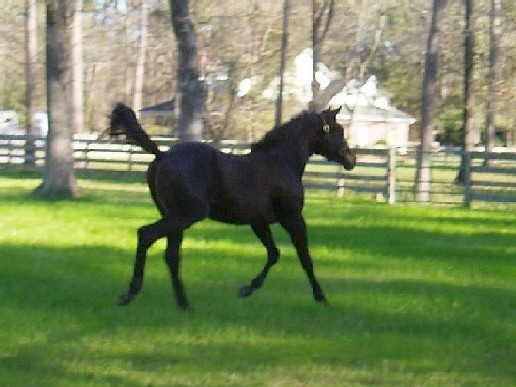 6 weeks later: 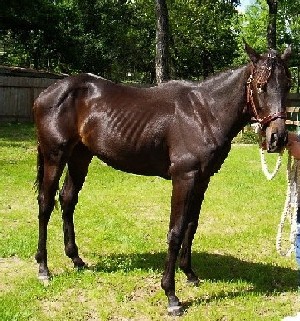 Current: 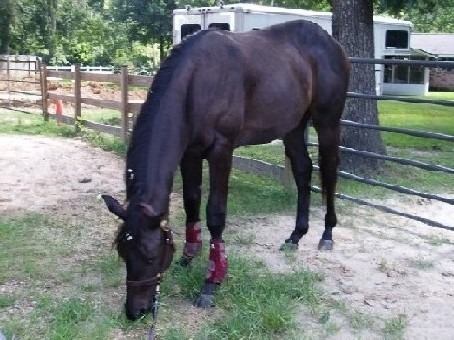
|
| Member: frances |
Posted on Sunday, Jul 8, 2007 - 3:02 am: Wow what drastic changes! I'm so happy for you - can imagine the huge relief and pleasure just looking at him ... and I'm sure it makes the ramen noodles taste delicious! |
| Moderator: DrO |
Posted on Sunday, Jul 8, 2007 - 7:55 am: A fascinating and unusual case Skutyba and a testament to the importance of accurate diagnosis.DrO |
| Member: skutyba |
Posted on Sunday, Dec 9, 2007 - 11:38 pm: Dr. Oglesby,If possible, I need to re-address this post. I considered posting under the ulcer column, but since all the prior information is already here...I opted to tack this on. He has done marvelously since I last posted, and all recommendations & treatments were followed. ALL symptoms had resolved. However, It is coming apparent that my horse is once again having ulcer issues or some form of abdominal pain. The horse is now 20 months old. 16-16.1 hands, and approx. 1150+ lbs. Visibly, he is a big, strapping gelding in prime health. Not fat, not thin. Very recently, subtle symptoms have returned. Within the past few weeks, I am seeing increased recumbancy, multiple times cast in the stall, reluctance to eat hay, and bruxism 1-2 times. About 2 weeks ago, he showed reluctancy to rise when in the stall. This prompted a visit from the vet whom gave a full exam including checking for any neuro deficits (none found). As a precaution, he was placed back on the Gastrogard at that time. Feeding/management recommendations from the university as follows still being continued: 1. 6 lbs. of grain daily split in 3 meals. 2. Free choice coastal hay 3. alfalfa at each meal 4. Corn oil twice daily 5. psyllium once daily 6. strongid c2x once daily 7. Turnout during the day, stalled at night My horse will no longer eat (for whatever reason) the expensive coastal hay I worked so hard to stock for the fall, therefore, I did find some timothy and am currently working on slowly adding that to his diet. Thus far, he is eating it. While his symptoms may be considered mild, and no "attacks" or true colics have occured...what I am seeing is definate change. Yesterday morning (about an hour post feeding), he was quite uncomfortable. Very quiet, patchy sweat, and stinted/tucked abdomen. I hand walked him slowly for a period of time and then turned him out in a small area to graze where he could be monitored. Dosed with Gastrogard at 1200 lbs. My vet and I are staying in close contact and will be speaking to the specialists who handled his case w/in the next day or so. The horse is not in any form of training. He is surrounded by other horses and is free to be social. Worth mentioning, but probably not related, was that he did have purpura post vaccination in late Aug. It was treated aggressively and he recovered. In the future, it is planned to serum test with the SEM Elisa to determine vaccination need. During that time, he was given Gastrogard as well (just covering our bases). Lots of concerns for obvious reasons. It was our hope at the time that this was a primary vs. a secondary problem, but now I just don't know if there could be scar tissue or a pyloric stenosis issue that is underlying...? As I said earlier, the majority of these signs are very subtle when present. I am catching them here-and-there, but when stacked together...it is painting a bigger picture. Sorry this is so long. Your thought would be greatly appreciated. Heather |
| Member: ajudson1 |
Posted on Monday, Dec 10, 2007 - 6:22 am: Heather,This is just a stab in the dark, but I have friends who said their horses did not do well on the daily wormer. Their horses also acted like they had stomach pain and went off their feed. If he's been on the daily wormer for a period of time now again, perhaps something as simple as taking him off that will be helpful. And maybe the psyllium is also causing cramping and bloating, especially if he isn't drinking enough. I always start with the simple things first by elimination, hopefully that avoids expensive tests! Just my thoughts, I do see you addressed DrO directly and I am not answering for him of course. Nice looking horse! |
| Member: ajudson1 |
Posted on Monday, Dec 10, 2007 - 6:37 am: Wanted to add after more thoroughly reading the whole story on your horse, I would tend to be against putting anything in his body other than feed with his history of problems. Hence my thoughts of no daily wormer or psyllium. I'd also try Aloe, think someone suggested that. I used it for acid reflux and had good results.Hope YOUR diet of ramon noodles doesn't get extended for another few months! 
|
| Member: skutyba |
Posted on Monday, Dec 10, 2007 - 8:14 pm: Hi Angie,I don't mind your post, and appreciate your feedback. However, in all honesty, I don't believe that the psyllium or strongid is contributing to the issue, but I could be wrong. Truthfully, I am now questioning everything I ever thought I knew. Frustrations & disappointment is well sunk in. The vets, others and myself have really "gone the distance"...and seeing a backslide is a kick in the pants. I spoke today with one of the doctors at the university. She has arranged for my horse to be seen by the Internal Medicine & Critical care department tomorrow. Based on his prior history, she too believes it is in his best interest to address these symptoms as soon as possible. They will start with a scoping and go from there. Many thanks, Heather |
| Member: ekaufman |
Posted on Monday, Dec 10, 2007 - 9:02 pm: Hi Heather (and Heather's Mom),I re-read this thread and can't really help you medically. I do think that you have done every reasonable thing to help this young horse, and that he's lucky to have you. You've also had a run of good health, which isn't failure. This handsome guy seems to be a high maintenance youngster, and he's lucky to have you watching over him. Good luck at A&M, and let us know what the vets there find. - Elizabeth |
| Member: skutyba |
Posted on Tuesday, Dec 11, 2007 - 12:27 am: Elizabeth,Thank you. Yes, he sure has been a high maintenance fellow. It wasn't that long ago that we all quit sleeping with one eye open, and had just started relaxing about him. Goodness knows, 5+ months on gastrogard should heal everything including world peace! My hope is that tomorrow will be a good day, and that the vets will tell me I'm jumping the gun. But, even they would rather address a potential situation early on. Being wrong is ok by me. Heather |
| Moderator: DrO |
Posted on Tuesday, Dec 11, 2007 - 7:21 am: Hello Heather,It certainly does sound like the ulcers have recurred so we will wait for the results of the exam. But be sure this assumption does not prevent a complete exam, including fecal test so nothing is overlooked. DrO |
| Member: kstud |
Posted on Tuesday, Dec 11, 2007 - 4:26 pm: Hi,It sound like the ulcers are back again, in a small percentage of horses gastric ulcers are an on going problem and need a daily maintenance dose of either gastrogard or a generic. Unfortunately I own one of those horses as does a friend of mine. We are both vets and have done everything possible but unless these horses get Omeprazole daily the ulcers return. I use Omeprazole at 3.08gm per 10ml with 10ml being the daily dose and it works perfectly. I understand that there have been studies done saying these generics do not work as well but that has not been my experience or my friends. I think that the issue of chronic ulcers is only beginning to be acknowledged now and perhaps there is a hereditary component as in the cases I know of it is definitely not related to diet or management. My horse has been on Omeprazole constantly for a year now and my friends horse for about 5 years. In both cases Gastrogard was used for 8 weeks until the horses scoped clear but in each case the ulcers returned in variable times. In my horse they return in about 5 weeks with no medication. Naturally I would prefer if he was medication free but he is much happier on treatment. In summer he is out 24/7 and now in winter he is out for 12 hours a day, he is always with his companions and our stables have grilles between them so they can see and touch. He is fed on Alfalfa, oil, and top quality hay with Pectin and Lecithin added for good measure. He is ridden 3 days a week, just light hacking and no stress. I have tried all the supplements but to no avail and as the ulcers return even when he is turned out in Summer and not worked I think that there is an as yet unidentified trigger mechanism in some horses. |
| Member: skutyba |
Posted on Tuesday, Dec 11, 2007 - 10:13 pm: Hi Dr. O and all,Well, my horse had his appointment today and everything went fairly well. The doctors took an extensive history and reviewed his past history. Spent 4+ hours doing diagnostics. They literally went over him from teeth to the ground. The following was done, along with the results: 1. Gastroscopy: Few areas of mild ulceration and hyperkeratosis visualized near the margo plicatus. 2. Abdominal Ultrasound: Questionable area seen in the right inguinal and ventral flank region. Area appeared to contain swirling fluid, which may well have been fluid in the intestinal tract. No evidence of increased free fluid or other abnormalities. 3. Abdominal radiographs: Small amount of sand present in ventral colon. 4. Radiographs of rt. & left stifle: Prominent proximal tibial physis, consistant with physitis. 5. CBC: No abnormalities noted 6. Chemistry Profile: No clinically significant abnormalities Diagnosis: Mild gastric ulceration, mild physitis of the proximal tibia. They started with the scoping and moved forward from there. While there is a VERY small amount of ulceration, the vets were not confident it was enough to create the symptoms. They spent a great deal of time doing the abdominal ultrasound. Brought in a few other doctors for consults. Afterwards, they also palpated him (normal), and then re-reviewed his history and current symptoms. Based on his reluctance to rise, they pursued the stifle rads and went over neuro info. They had mentioned doing a scoping to view the dorsal colon, but I do not believe it was done. My instructions, thus far, is: 1. Continue the gastrogard for 2 more weeks. 2. Start Equioxx once daily for 10 days. 3. Continue normal turnout routine. 4. Continue his normal diet. They have requested that I watch him closely to see how he responds to the Equioxx. They want to rule out discomfort from his stifles. In the event that he shows any increase of symptoms, colic or lack of progress, he will return to the hospital for an additional ultrasound and possibly more invasive diagnostics. The doctors were pretty pleased at the results of the scoping. I was able to sit in and watch while it and the ultrasound was done, which was helpful to me. Any thoughts? Heather |
| Moderator: DrO |
Posted on Thursday, Dec 13, 2007 - 8:07 am: Heather was your horse inappetant during the more recent "abnormal episodes" in the past?DrO |
is The Horseman's Advisor
Helping Thousands of Equestrians, Farriers, and Veterinarians Every Day
All rights reserved, © 1997 -
